I built Sortie after reading a confident meeting summary I couldn’t fully trust. I needed to check its claims against the source.
Sortie turns meeting transcripts, email, calendars, action state, and forecast signals into summaries, daily debriefs, and weekly retrospectives.
Why I built it
The summary had the names and actions right enough to sound authoritative, yet I couldn’t tell which claims came from the transcript, which came from accumulated context, and which were model inference. Once those distinctions disappeared, the next debrief inherited the same uncertainty.
I needed a durable record across meetings, email, action state, and forecast changes, with source authority preserved at every handoff and unknowns kept visible.
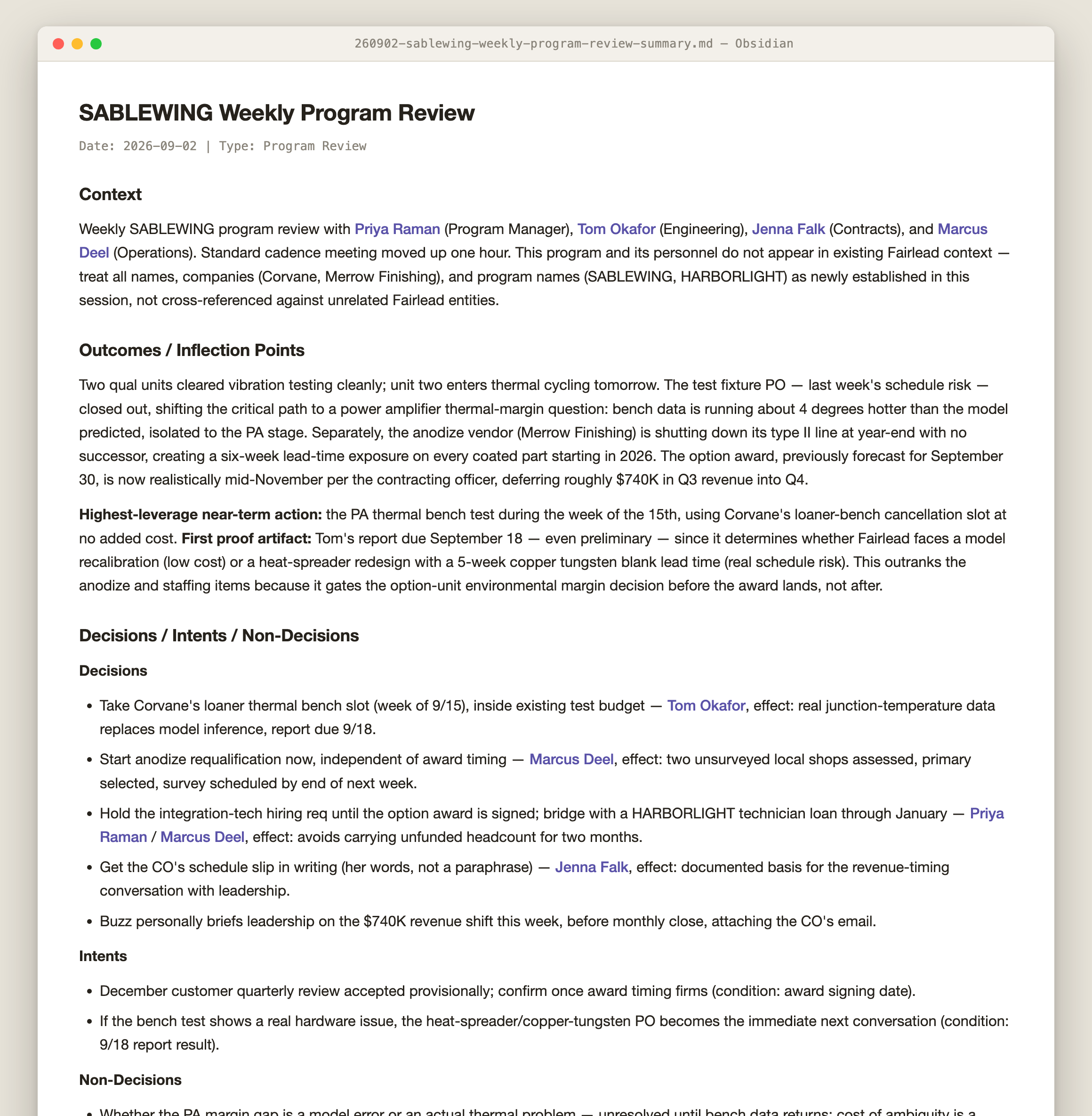
FIG. 01- MEETING SUMMARY, GENERATED FROM SYNTHETIC MEETING DATA
System output against fabricated inputs; no employer data.
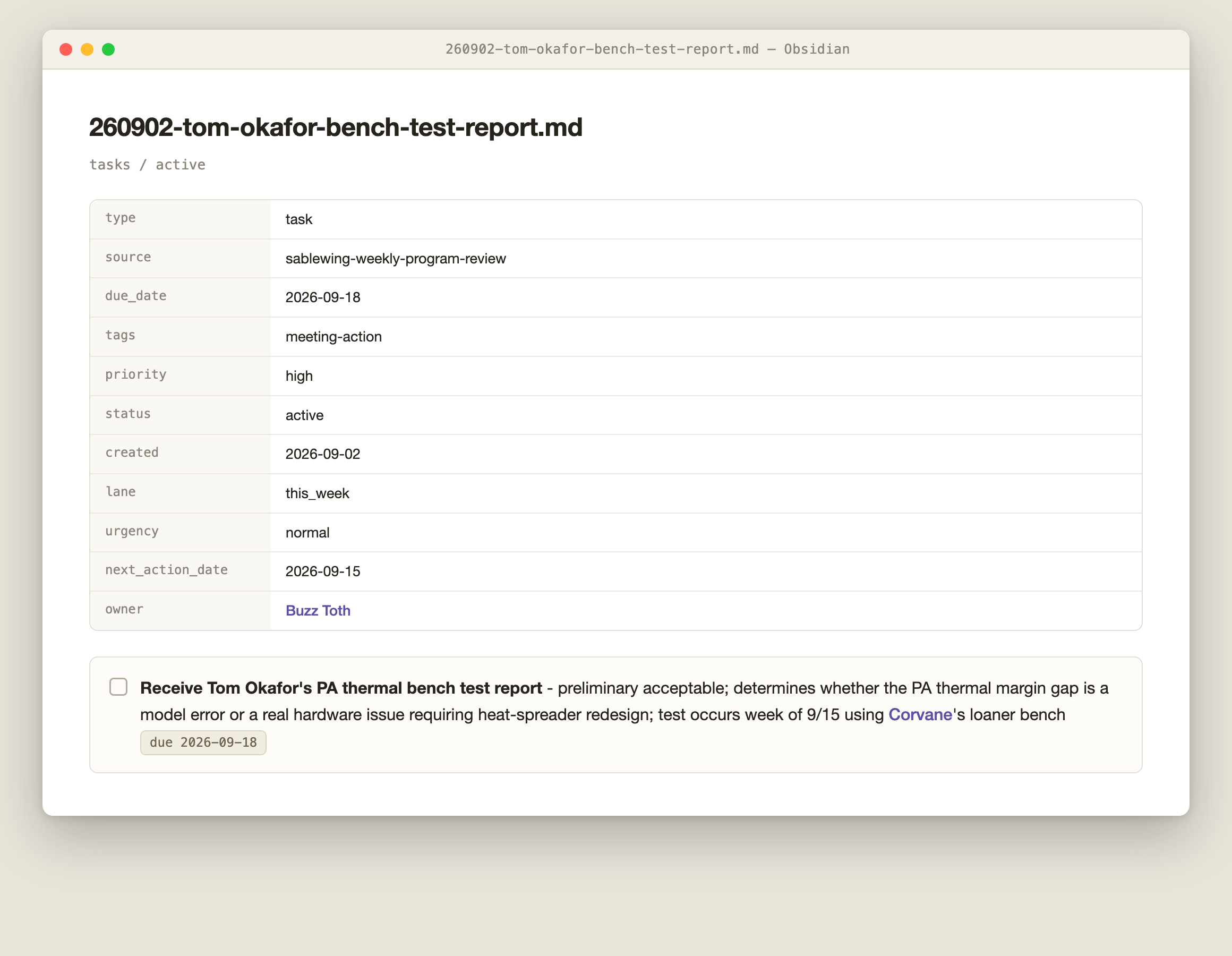
Sortie processes raw transcripts, tracks actions, watches forecast-relevant changes, and produces daily and weekly summaries. Rules govern what it can infer, what it must preserve, and what needs my review.
I direct the system in natural language and AI writes the code. Architecture, failure analysis, acceptance criteria, and the decision to ship stay mine.
Design choices
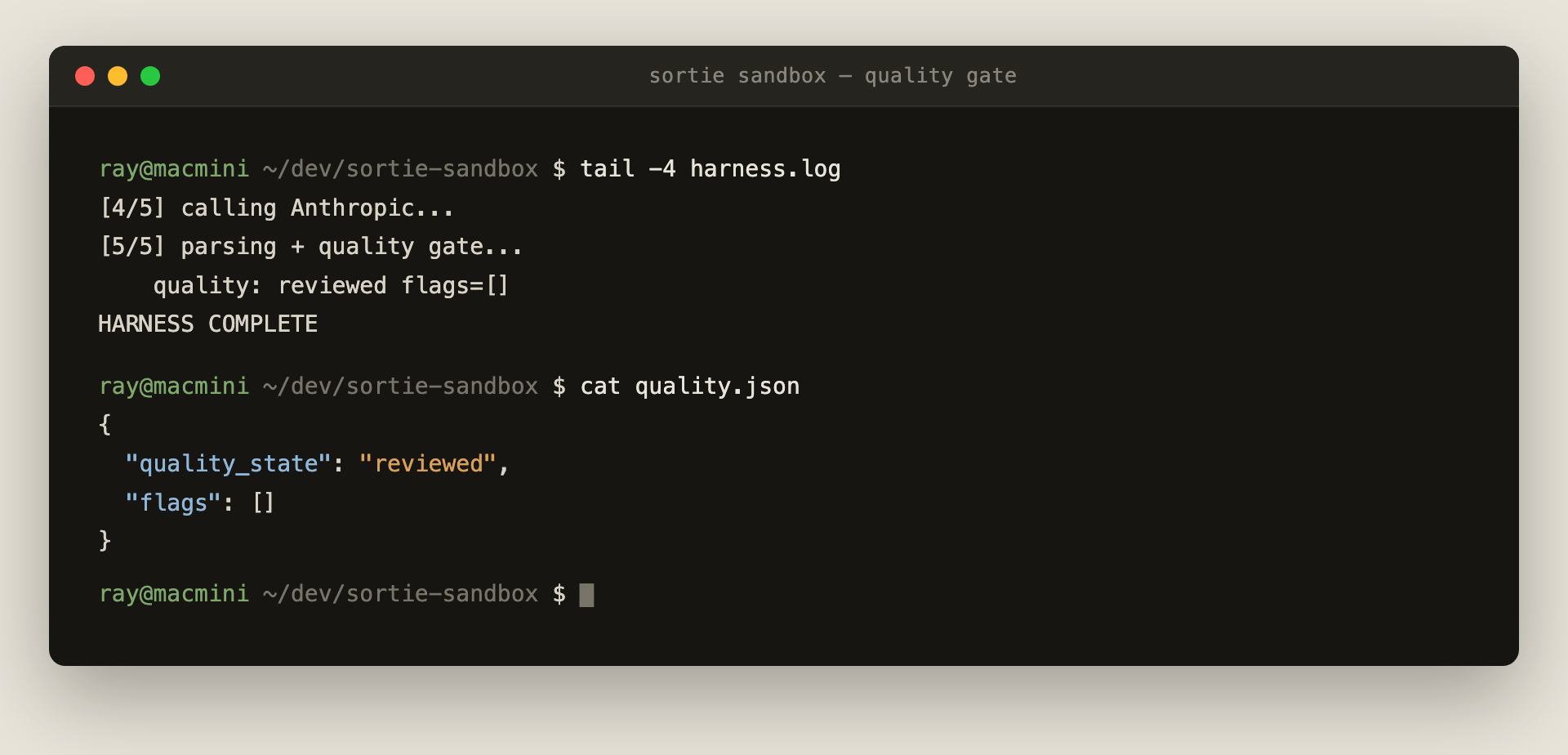
Gate semantic quality
Structural checks look for specific defects in each summary. A summary that fails is held out of downstream debriefs.
Proposed additions and uncertain entities go through review. I decide what belongs in the context and what should be treated as a transcription error.
Recover the useful record
I take recovery snapshots before rewriting daily notes, restore missing meeting links, and verify repairs from disk. The system refuses a rewrite if it cannot save the recovery copy. External edits can still race with a write, so an independent audit checks the resulting record.
Using the system
The checks catch specific structural defects. I still review important claims against their sources and treat missing evidence as unconfirmed.